APPLY FOR A PROFESSIONAL ACCOUNT
Product Description The Coretech Achilles Wedge is specifically engineered to aid in the rehabilitation of the Achilles tendon by providing a suppo...
View full detailsHCPCS Code L4360, L4361
Product Description Designed for customizable support, the Coretech 360 Exo Walker Boot Short is ideal for those who are ready to regain mobility f...
View full detailsHCPCS Code L4360, L4361
Product Description The Coretech 360 Walker Boot Short is a top-tier solution for individuals in need of reliable, durable, and comfortable support...
View full detailsHCPCS Code L4386, L4387
Product Description Durable and lightweight, the Coretech 386 Walker Boot Short provides protection and support for the foot and ankle during recov...
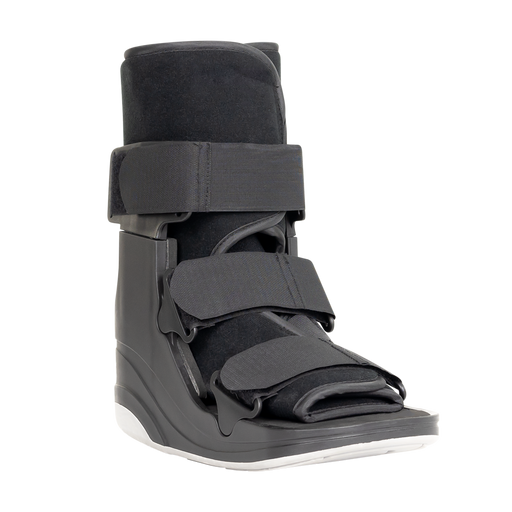
View full detailsShort walker boots, also called CAM walking boots or controlled ankle motion boots, provide protected support for the foot and ankle while allowing provider-directed ambulation. This category is intended for healthcare professionals and providers who need orthopedic bracing solutions for evaluation, fitting, patient education and ongoing support.
They may support patients with stable foot fractures, metatarsal injuries, mild ankle sprains, soft-tissue injuries, post-operative foot protocols, toe injuries or lower leg conditions that do not require taller tibial control. These products may be used for acute injuries, post-operative recovery, chronic instability, degenerative conditions, pain management, protected mobility or functional support during activities of daily living. Common provider search terms include orthotic brace, orthopedic support, DME brace, prefabricated orthosis, custom-fit brace, immobilization brace and recovery support.
Selection considerations include rocker sole design, boot height, liner comfort, strap adjustability, air or non-air bladder systems, sole rigidity, weight-bearing status, contralateral shoe height and patient gait safety. Providers should consider patient anatomy, affected joint or spinal region, medial-lateral control, flexion-extension control, compression, rigid versus soft support, adjustability, skin tolerance, ease of application and compliance. Product selection should also align with the treating provider’s protocol and the patient’s functional goals.
Common walker boot HCPCS references may include L4360, L4361, L4386 or L4387 depending on pneumatic versus non-pneumatic design and custom-fit versus off-the-shelf classification. Always verify the exact product details, payer requirements, diagnosis support, medical necessity and whether the item is classified as off-the-shelf or custom-fitted before assigning a billing code.
These braces are used by healthcare professionals, orthopedic practices, podiatry clinics, DME providers, chiropractors, rehab teams and clinical staff involved in patient bracing.
They may support protected ambulation, foot immobilization, reduced forefoot stress, post-operative protection and transition from acute injury to functional recovery.
Follow the product sizing guide, measure the indicated body region, confirm secure fit and reassess comfort, circulation, skin integrity and brace position after application.